
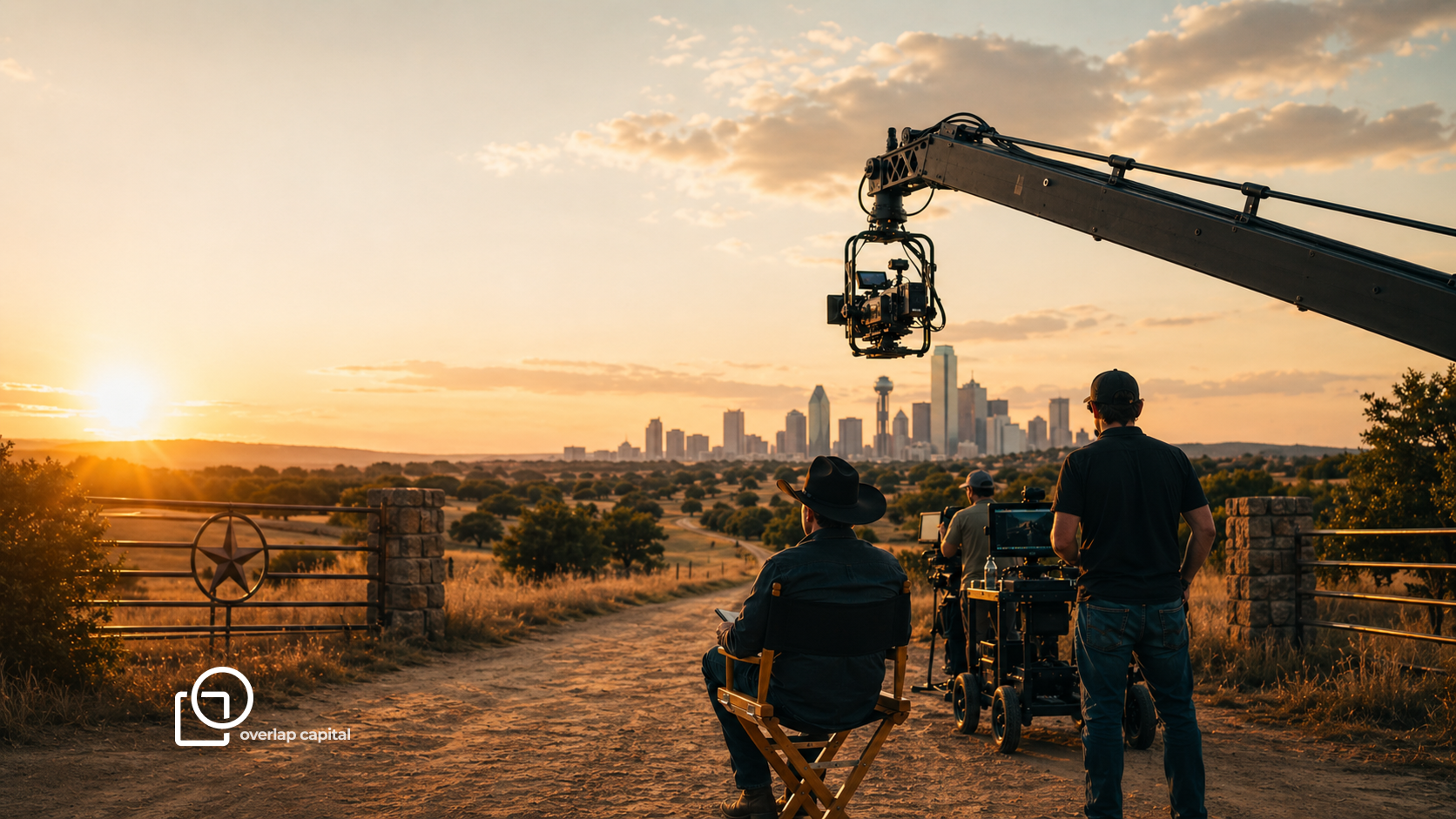
Dallas has a decision to make.
The passage of Texas Senate Bill 22 did more than expand the Texas Moving Image Industry Incentive Program. It gave the state a new economic development lane at a moment when cities are competing for jobs, tourism, visibility, infrastructure, and creative industry growth. For Dallas, that matters. Not eventually. Now.
SB 22 strengthened the incentive structure for qualified moving image projects produced in Texas, including film, television, commercials, educational and instructional videos, digital interactive media, visual effects, rural filming, Texas heritage projects, and qualifying postproduction work. The bill also created a dedicated Texas moving image industry incentive fund and increased the seriousness of the state’s commitment to keeping more production activity here. For the right project, the combined incentive opportunity can reach as high as 31% of qualified in-state spending.
That kind of incentive does not create an industry by itself. It does, however, change the conversation.
For years, Texas has had the stories, the landscapes, the talent, the music, the athletes, the business culture, and the scale. Too often, the production dollars still went elsewhere. Other states captured the crews, vendor spend, hotel nights, equipment rentals, tax activity, and long-term production infrastructure while Texas remained the source material.
SB 22 gives Texas a stronger answer. Now Dallas needs one too.
Dallas should not treat this bill like a state-level headline that belongs to Austin or a Fort Worth story powered by Taylor Sheridan’s momentum. Fort Worth deserves credit. Sheridan’s success helped show lawmakers what many Texans already understood: Texas is not trying to imitate Hollywood. Texas already has its own cinematic gravity.
Overlap Capital said as much in its June 16, 2025 statement supporting SB 22, arguing that Texas has “the story, the locations, the talent, and the scale,” and that the bill helps make the financing conversation more realistic for producers who want to shoot, hire, build, and keep economic activity inside the state.
That is the heart of the issue. Production is not only a creative activity. It is a financing activity. A producer may love Dallas. A director may have the right script. A documentary crew may already be following a sports story here. But without a credible budget, production schedule, funding plan, lender conversation, and incentive strategy, the project can stall before a camera ever rolls.
Dallas can’t afford that.
The city is already facing enough economic pressure. D Magazine recently reported that Dallas was beginning “immediate cost containment measures” after a budget shortfall, with expenses forecast to exceed budget by $16.4 million, revenues $3.8 million below budget because of declining sales tax revenue, and the city’s self-funded employee health insurance costs projected to exceed budget by $13.8 million. The city’s response included a hiring freeze, overtime restrictions, delayed non-essential purchases, and paused travel.
That should sharpen the local conversation around SB 22.
This is not about pretending film incentives will solve Dallas’ budget concerns. They will not. But a city facing weaker sales tax revenue should be serious about industries that generate activity across hotels, restaurants, transportation, security, equipment rental, construction, music, design, editing, accounting, legal work, real estate, and local labor. A production economy spreads money through the city in ways that are visible and measurable.
Dallas has had enough conversations about what it lost. AT&T’s headquarters move to Plano was not just a real estate story. It was a reminder that corporate gravity can shift, and cities that assume their economic base will remain intact are asking to be surprised. Dallas proper needs new engines of activity, especially ones that can restore civic trust, put people to work, and turn local identity into exportable value.
Moving image production should be one of those engines.
The timing is unusually strong. FIFA is around the corner. Sports documentaries are being shot. Dallas has more sports stories than it can count, from professional franchises to college programs, high school football, athlete development, ownership stories, fan culture, and the business of sports. The region also has Grammy-winning musicians, producers, engineers, content creators, churches, entrepreneurs, restaurants, neighborhoods, fashion, architecture, and history that can support documentaries, episodic projects, branded content, music-centered films, and commercial work.
Dallas also has something else: contrast.
We are watching data centers expand across North Texas at the same time our creative economy has a chance to organize itself. Data centers may bring infrastructure and investment, but media production brings a different kind of activity. It puts crews in hotels, musicians in studios, editors in post, trucks on location, restaurants into catering, warehouses into production use, and local stories into national distribution. Dallas should want both forms of development, but it cannot keep acting like server farms are the only future worth courting.
The larger Texas cities understand this. Austin, Houston, and San Antonio have all moved to strengthen or promote their local film posture in response to the state’s improved incentive climate. Dallas does not need to copy them, but it does need to respond with intention. The state created a stronger incentive. Local markets now have to do the harder work of organizing production capacity around that incentive.
For Dallas, that means connecting the people who already exist here but too often operate in separate lanes: producers, filmmakers, musicians, studio owners, documentary crews, sports agents, brand strategists, postproduction houses, location owners, commercial real estate operators, lenders, banks, public officials, hotel operators, and creators with real audiences. The city does not need to invent a media ecosystem from scratch. It needs to make the existing ecosystem easier to finance.
That is where Overlap Capital sees the opportunity.
SB 22 is not automatic funding. It is not a blank check. It does not replace underwriting, private capital, budgeting, compliance, experienced production management, or business planning. Overlap Capital made that point in its original SB 22 statement and continues to view the bill as an economic development tool that becomes more powerful when paired with responsible production finance.
A serious production still needs a serious package. That includes the production schedule, budget, use of funds, entity structure, eligible spend assumptions, funding need, bridge strategy, and documentation lenders or partners can evaluate. The same is true for studio operators, equipment companies, rural production facilities, postproduction vendors, and production-adjacent businesses that want to expand because Texas is becoming more competitive.
The USDA Business & Industry Loan Guarantee Program may also become relevant for certain rural media infrastructure opportunities, especially where eligible communities can support production facilities, equipment acquisition, job creation, and production-adjacent businesses. That matters because SB 22 should not only benefit the most obvious urban locations. A stronger Texas production economy should connect Dallas, Fort Worth, rural counties, small towns, and regional vendors into one more coherent production map.
Dallas has the advantage of being both a city and a connector. It sits near Fort Worth’s growing production credibility. It has airport access, corporate relationships, creative talent, hospitality infrastructure, sports gravity, and financial sophistication. It also has neighborhoods and cultural texture that cannot be replicated on a backlot.
So the call is simple: Dallas media operators need to get organized.
Not noisy. Organized.
If there is a documentary concept, build the budget. If there is a music story, package the rights and production plan. If there is a sports series, map the schedule and funding need. If there is a studio or production facility concept, model the capital stack. If there is a rural location play, understand both the state incentive and the financing path. If there is a creator with audience but no production infrastructure, bring the project into a real funding conversation.
The city has enough talent to fill the pipeline. The missing piece is disciplined packaging.
Overlap Capital is prepared to help production companies, media entrepreneurs, studio operators, and production-adjacent businesses think through the funding side of this moment. That includes production schedules, budgets, lender readiness, working capital, equipment financing, real estate financing, bridge capital, and broader capital-readiness strategy.
Dallas does not need to wait for permission. It does not need to pretend to be Hollywood. It does not need to watch Fort Worth, Austin, Houston, or San Antonio absorb the upside while it debates whether the opportunity is real.
The opportunity is real.
The state has moved. The market is moving. FIFA is coming. Productions are looking for financially credible places to land. Dallas has the people, the stories, the locations, and the business base.
Now it needs the will.
Dallas should be in the shot.