
Sector: Beauty and personal-care services
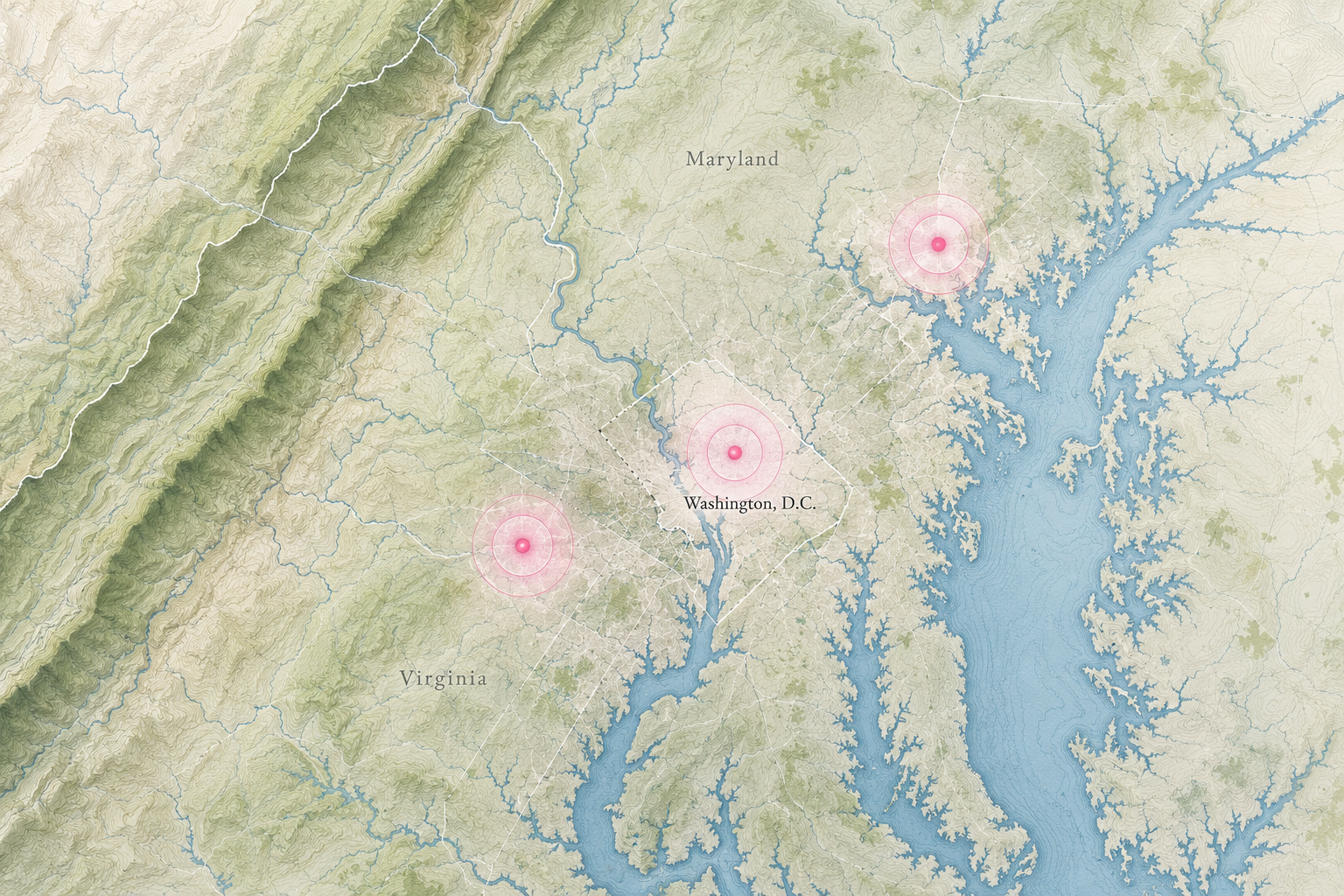
Region: Washington, D.C.–Maryland–Virginia
Products used: WealthOnce™ and CapAdvise™
Primary proof point: A debt request redirected toward a potentially six-figure franchise-fee strategy
The challenge
An established beauty-services company approached Overlap Capital seeking funding for expansion.
The obvious response would have been to search for another business loan. But the company had more than a decade of operating history, a loyal customer base, a mature rewards program, a longstanding point-of-sale relationship, established talent-development practices and a demonstrated ability to select promising locations.
The company did not merely operate a successful salon. It possessed a repeatable operating system.
Taking on high-interest small-business debt could have financed one more location. Turning that operating system into a franchise platform could create an entirely new source of revenue.
The Overlap approach
Through the capital-path analysis behind CapAdvise™, Overlap Capital challenged the original assumption that borrowed money was the best answer.
The team examined the company’s existing assets, including brand recognition, operating procedures, customer-retention practices, talent recruitment and training, location-selection experience, pricing and revenue history, point-of-sale infrastructure and education and service-delivery methods.
Through WealthOnce™, Overlap Capital began organizing the entity, brand, intellectual-property and ownership questions surrounding a potential franchise system.
The strategy included preparing the business to work with qualified franchise counsel on the franchise disclosure document, required state registrations and filings, trademark strategy, training and education materials, operating manuals, franchisee standards and ownership of the underlying intellectual property.
The proposed economic model contemplated upfront franchise fees that could approach $100,000 across planned locations, along with a recurring 5% fee structure divided between general system revenue and marketing support.
Those amounts remain projections until franchise agreements are executed and fees are collected.
The result
The company gained a new expansion thesis.
Instead of using expensive debt to own and operate every new location itself, the brand could potentially receive cash from qualified franchisees, participate in recurring revenue and extend its operating system into new markets with less direct capital expenditure.
The engagement repositioned the company’s experience as an asset capable of generating revenue—not merely as history used to support another loan application.
What this case demonstrates
Sometimes the best path to capital is not capital at all. It may be a product, license, franchise, service or revenue model already present inside the company but not yet organized for sale.
Your path to capital may not begin with a loan.
It may begin with invested dollars, a stronger entity, improved credit or new revenue already hiding inside the business. Overlap Capital helps determine which path fits—and brings the right products, partners and structure around it.